ServicesWell Water Treatment
Well Water Treatment in Dunedin
We design and install staged treatment systems for private wells that remove the smell, stains, grit and hardness your well water carries. You get a realistic install date, a clear arrival window on the day and a call from us if anything changes.
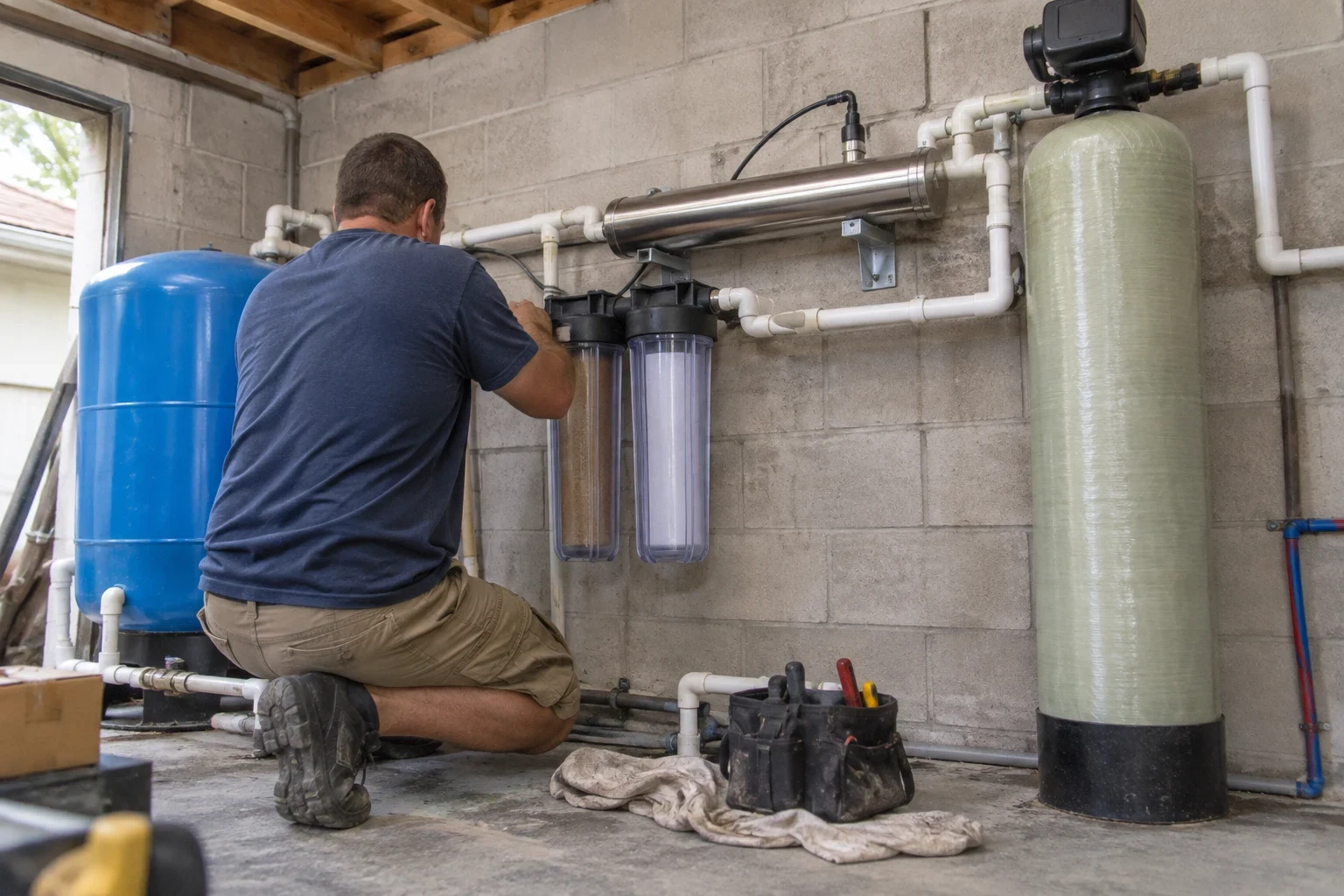
Treatment built around what your well water carries
Water from a private well never passes through a municipal treatment plant, so whatever the ground adds reaches your faucets. On Florida's west coast that often means a rotten-egg smell from hydrogen sulfide, orange or black staining from iron and manganese, and scale from water that has moved through limestone. Some wells also bring up sand or carry bacteria.
Well water treatment is a sequence of stages installed near your pressure tank or where the main line enters your home. Each stage handles one problem, in an order that lets the next one work properly. Iron comes out before the softener, for example, so the softener resin is not fouled. We plan that order around your water, then install it with clean connections, a bypass valve and enough room left to service every tank and housing.
Before we book, we tell you how long the job will realistically take. If parts or weather push the date, you hear it from us first.
What a well treatment system includes
A first stage for sand and grit
Before water reaches anything else, it passes through a spin-down screen or a cartridge filter that traps fine sand. Stopping grit at the front keeps it from scoring the control valves and media tanks further down the line.
Iron and sulfur removal
An oxidizing filter, often paired with air injection, converts dissolved iron and hydrogen sulfide into solid particles the media bed can hold. It rinses itself on a timed cycle, so the bed stays clear without daily attention.
Hardness and polishing
When hardness runs high, a softener sits after the iron stage. A carbon stage at the end can refine taste. Our Water Softeners page explains how we size that part.
UV disinfection
For wells with bacteria concerns, an ultraviolet chamber is the last stage. It adds nothing chemical to your water, and the lamp is replaced about once a year.
Bypass, drain and pressure check
Each system includes a bypass valve so it can be isolated, a backwash drain line routed correctly, and a pressure reading taken before we start and after we finish.
Support after the install
We offer ongoing support for maintenance, filter replacements and service needs for as long as the system serves your home. When a cartridge comes due or a valve misbehaves, you reach the same people who put it in.
Signs your well needs treatment
A rotten-egg smell
Sulfur odor, often strongest from the hot water tap, points to hydrogen sulfide. It can also tarnish silver and fixtures over time.
Orange, brown or black stains
Rust-colored rings in toilets and tubs come from iron. Black or dark gray marks usually mean manganese. Both can tint laundry.
White crust and spotted glassware
Chalky buildup on faucets and showerheads signals hard water. The same scale collects out of sight in your water heater, shortening its life.
Sand in faucet screens
When aerators or the inlet filters on your washer and dishwasher keep clogging with fine sand, sediment is making it past the well.
Slimy buildup in the toilet tank
A reddish, slick film can be iron bacteria. It returns quickly after cleaning until the water is treated.
Older equipment that no longer keeps up
If an existing system has stopped working well, our Water Softener & Filtration System Replacement page covers how we swap it out.
How your well treatment project runs
- 1
A phone conversation
We ask what you are seeing and smelling, where your pump and pressure tank sit, and how many people live in your home. If you already have a recent report on your well water, keep it close by. We then give you a realistic timeline for the visit and the install.
- 2
An in-home look
We inspect your well equipment, pressure tank, available space, drain options and power for any valve or UV unit. You get a written, line-item estimate that shows each stage and why it is there.
- 3
Install day
We confirm your arrival window the day before and call if we are running behind. Water is usually off for a few hours. We cover floors along our path, keep the work area tidy and clear away packaging before we leave.
- 4
Startup and follow-up
We flush each tank, set the backwash schedule and show you the bypass. A few weeks later we check back to make sure the smell and staining are gone.
What shapes the cost
A well system is priced from what your water carries and how your home is laid out, never from a preset package. The written estimate breaks out every stage on its own line. You see what each piece costs before you decide anything.
- How many stages your water needs
- Every problem in the water means another piece of equipment. A well that only sends up sand may need one prefilter. Sulfur, iron, hardness and bacteria together call for several tanks working in order.
- Peak demand in your home
- The more bathrooms and people you have, the more water moves through the system at busy times. That calls for bigger media tanks and wider valves, so a shower upstairs keeps its pressure while the dishwasher fills.
- Condition of the existing plumbing
- A tired pressure tank, corroded fittings or an undersized line may need work before new treatment equipment is connected.
- Location and drain access
- Equipment set outside needs shelter from strong Florida sun and summer rain, and every backwashing tank needs a proper drain within reach.
Well water treatment questions
Something not covered here? (727) 428-9335
How long will my water be off on install day?
Most installs keep the water off for a few hours, though systems with more stages take longer. We tell you the expected window when we book. If something on the day extends it, we let you know before it happens.
Will treatment lower my water pressure?
A correctly sized system causes very little drop. We match tank and valve sizes to your flow, and we record your pressure before and after so you can see the difference for yourself.
How much maintenance does a well system need?
Sediment cartridges are usually changed every few months, a UV lamp about once a year, and a softener needs salt. Oxidizing media lasts years but should be checked. We stay available for that upkeep and for any service the system needs later.
Can the equipment go outside or in the garage?
Yes. Many well systems sit beside the pressure tank, either in a garage or outdoors. Outdoor installs need a cover or enclosure and a level base, which we plan for in the estimate.
What happens if my install date has to move?
We call as soon as we know, explain the reason and offer the next realistic date. You will not be left waiting at home without word from us.
Should I add reverse osmosis for drinking water?
It is optional. Many homes on well water add an under-sink unit for cooking and drinking after the whole-home stages. Our Reverse Osmosis page explains how it works.
Clear well water, on a date you can plan for
Tell us what your water is doing and we will outline the stages it needs and a timeline that fits your week.