ServicesChlorine & Chloramine Removal
Chlorine & Chloramine Removal in Dunedin
We install whole-home carbon systems that strip chlorine and chloramine from the water before it reaches your shower, kitchen and laundry. You get a clear install plan, a realistic arrival window and a call from us if anything about the day changes.
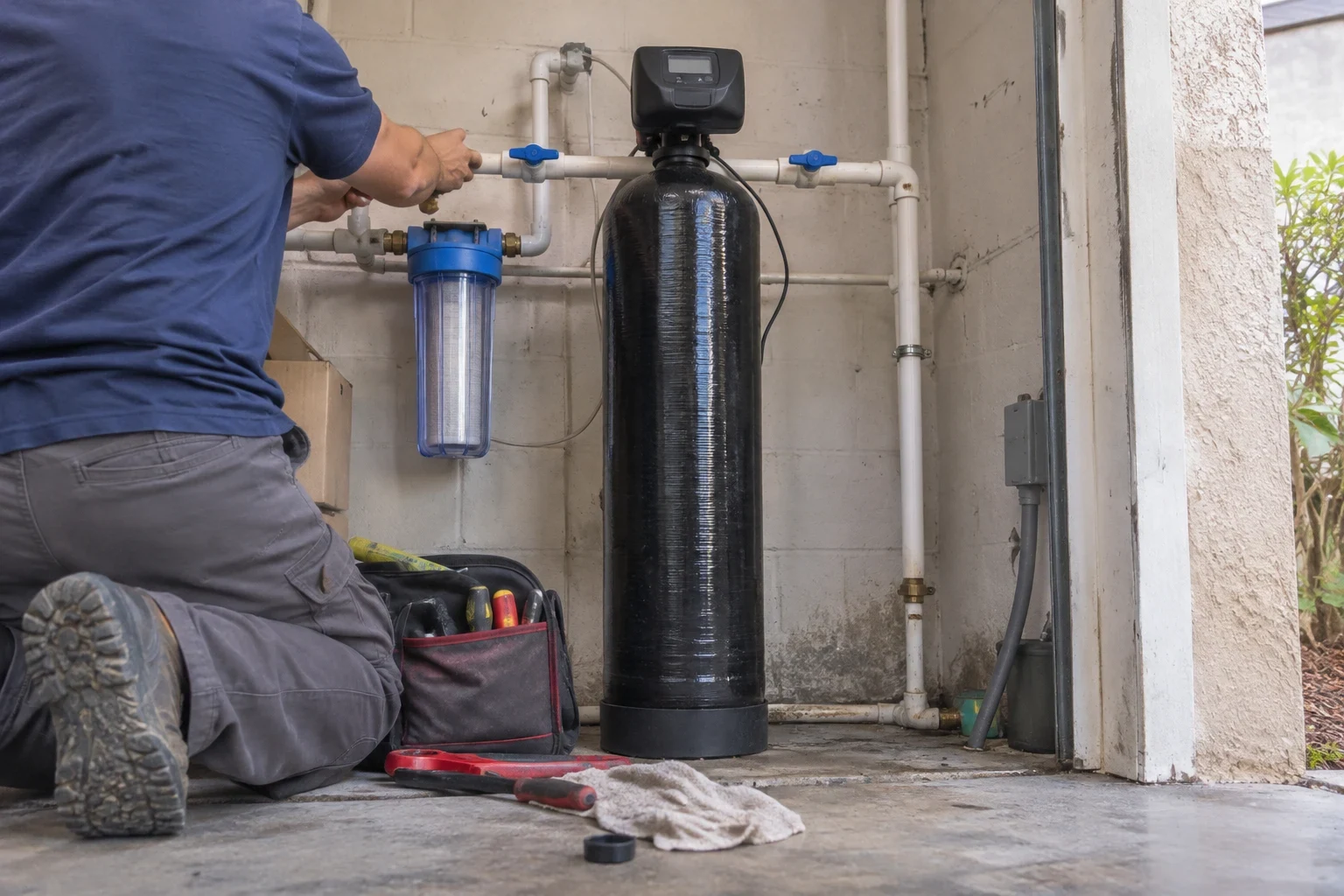
What removing the disinfectant actually changes
City water in Florida is treated with chlorine or chloramine before it travels through the mains. That keeps bacteria in check on the way to you, and the job is done once the water is inside your home. What lingers is the pool smell when you turn on the shower, a flat edge to coffee and tea, and water that can feel harsh on skin and hair.
The two disinfectants call for different media. Standard activated carbon pulls free chlorine out readily. Chloramine is chlorine combined with ammonia, and it is more stubborn, so it needs catalytic carbon and more contact time, which usually means a larger tank. Your utility's annual water quality report names the disinfectant it uses, and we size the system to match it and to how much water your household draws at once.
We plan installs around your week. Before we arrive you know the window, roughly how long your water will be off, and what the finished setup will look like.
What the installation includes
Carbon sized to your flow
We choose tank size by bathrooms and peak demand, not by the smallest unit that fits. That keeps the water in contact with the carbon long enough to work and holds pressure when the shower and dishwasher run together.
Sediment prefilter
A prefilter catches grit and scale before it reaches the carbon bed. The carbon stays open and effective for longer.
Bypass valve at the main line
We tie in where the main enters your home and add a bypass. Water can be routed around the system for service without leaving the house dry.
Careful placement and finish
The tank sits level in the garage or against an exterior wall, with square pipe runs and labeled shutoffs. It should look like it belongs there.
Startup flush and walkthrough
New carbon releases fine black particles the first time water moves through it. We keep flushing until the discharge shows no trace of them, then check every fitting for drips. Before we leave, you see how the bypass works and hear what upkeep the system will need.
Signs chlorine or chloramine is worth removing
The bathroom smells like a swimming pool
Steam carries the disinfectant out of the water and into the room. A closed bathroom after a hot shower is where most people first notice it, and it is one of the most common reasons people call us.
Coffee and tea taste off
A faint chemical note in brewed drinks or ice cubes usually points to the disinfectant rather than anything else in the water.
Dry skin and brittle hair
Many people notice tight skin and dull hair after showering. Taking the disinfectant out at the main line treats every shower at once.
Your current filter fades quickly
If the smell comes back weeks after a cartridge change, the filter may be plain carbon working against chloramine. Catalytic carbon is built for that job.
Rubber parts wear out early
Chloramine can be tough on some toilet flappers, washers and hoses. Frequent replacements are worth mentioning when you call.
You keep fish
Chlorine and chloramine are both harmful to aquarium and pond fish. A whole-home system gives you a better starting point, and many keepers still use a conditioner as a backstop.
How the work runs, from first call to finished install
- 1
A conversation by phone
We start with a picture of your daily water use: who lives there, the bathroom count, where the main line enters and any equipment already in place. That gives us enough to prepare your quote and offer install dates, each with a clear arrival window.
- 2
Arrival and preparation
We arrive within the window we gave you. If traffic or an earlier job runs long, you hear from us before the window passes, not after. We lay down protection, shut off the water and tell you how long it will be off.
- 3
Installation and flush
We cut in at the main, set the prefilter, tank and bypass, then flush the new carbon bed before restoring full flow. If the existing pipe turns out to need extra work, we explain it and how it affects the timing before we go further.
- 4
Walkthrough and ongoing support
We show you the valves, clean up the work area and leave you with a maintenance outline. After the install, our ongoing customer support stays in place for maintenance, filter replacements and any service needs that come up later, all reached with one phone call.
What shapes the price
Every home gets a quote built from its own details, given by phone once we understand your setup. The main drivers are below. If something changes the scope on install day, we talk it through with you before any added work.
- Chlorine or chloramine
- Chloramine needs catalytic carbon and a larger bed for enough contact time. Plain chlorine can often be handled with a smaller system.
- Peak demand in your home
- A busy morning with two showers and the dishwasher running pulls a lot of water at once. Bigger households need a bigger tank so the treatment and the pressure both hold up.
- Where the system goes
- A clear spot near the main line is simplest. A longer run, tight access or an outdoor install with protection from sun adds time and material.
- Existing equipment
- Working around or removing an older filter, or fitting the carbon ahead of a water softener, changes the plumbing layout and the parts list.
Questions about chlorine and chloramine removal
Something not covered here? (727) 428-9335
Will regular carbon remove chloramine?
Not well. Standard carbon handles free chlorine, but chloramine needs catalytic carbon and more contact time. If your utility uses chloramine and your current filter uses plain carbon, that likely explains why the smell returns.
Will I lose water pressure after the install?
You should not notice a difference if the tank is the right size for your home. Flow problems almost always trace back to undersized units, so we size by bathroom count and peak use. Before we pack up, we test pressure at your fixtures.
How long will my water be off on install day?
Usually part of the day, depending on access and the condition of the pipe at the main. We give you an estimate before we shut it off and update you if anything we find changes it.
I already have a water softener. Does that matter?
It helps to know. Chlorine and chloramine can wear down softener resin over time, so the carbon normally goes ahead of the softener to protect it. We plan the layout so both units can be serviced easily.
Does this replace a reverse osmosis system for drinking water?
They do different jobs. Carbon takes the disinfectant out of every tap in your home. Reverse osmosis adds further treatment at the kitchen sink for drinking and cooking water, and some homeowners choose both.
How often does the carbon need attention?
The prefilter cartridge is changed on a regular schedule, and the carbon bed lasts much longer depending on your water use and disinfectant. We explain what to expect at the walkthrough and remain available afterward for replacements and service.
Choose an install day that fits your week
Tell us about your home and the taste or smell you have noticed. We will explain which media suits your water, give you a quote by phone and offer dates with a firm arrival window.