ServicesWater Softeners
Water Softeners in Dunedin
We size, install and set up water softeners that stop scale, spotting and stiff laundry at the point where water enters your home. You get a realistic timeline before we start, an arrival window you can plan around, and a call from us if anything on our end shifts.
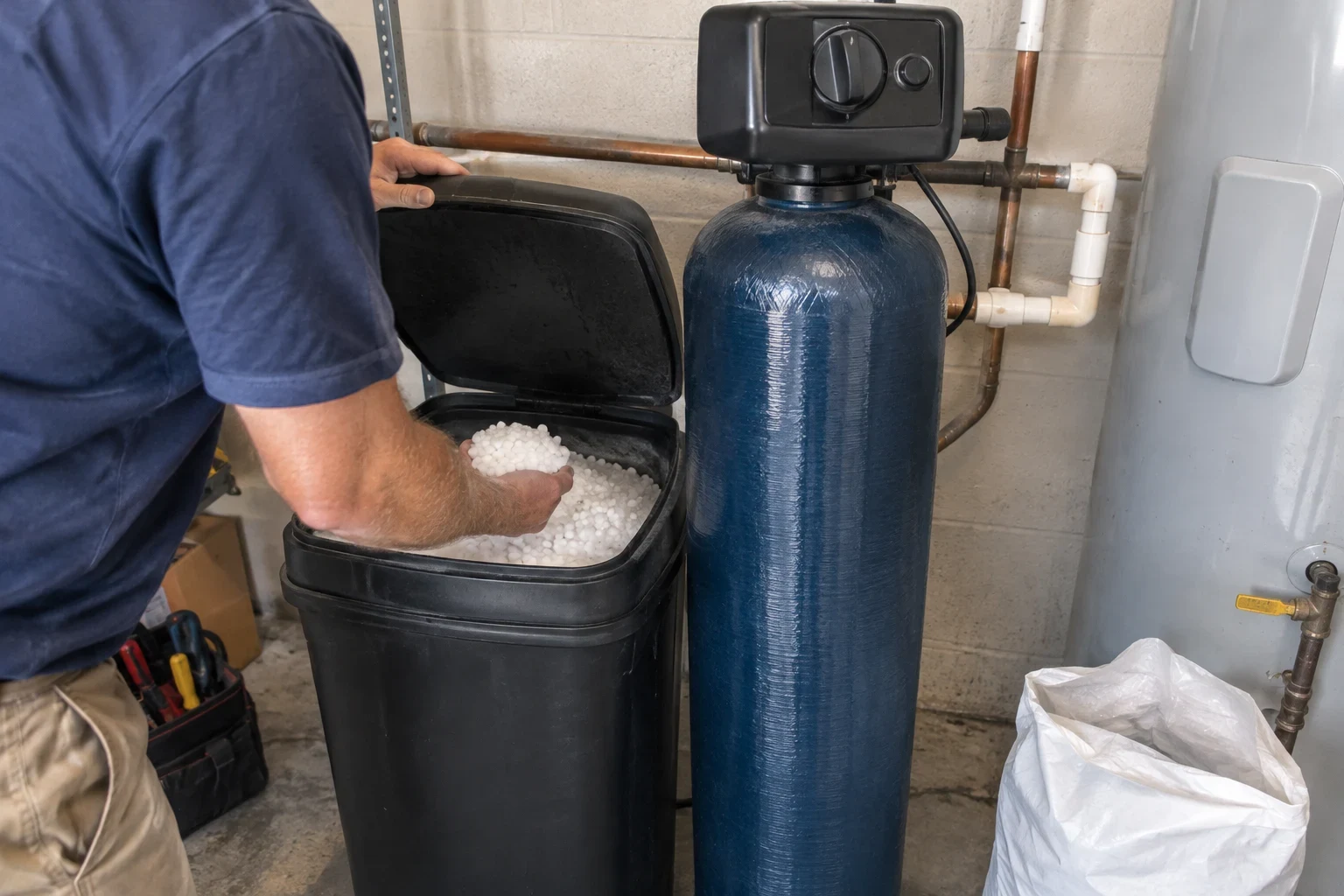
How softening works and where it fits
Hardness comes from calcium and magnesium dissolved in your water. Inside a softener, a tank of resin beads trades those minerals away, and a brine rinse recharges the beads on a regular cycle. Fixtures stay clearer, soap rinses off cleanly, and your water heater and appliances carry less scale as the years go by.
Softening solves one problem well. Chlorine taste and odor sit outside its reach, and our Chlorine & Chloramine Removal and Whole-Home Filtration systems are built for that. Before recommending anything, we listen to what you notice and look at how your plumbing is laid out, so the equipment fits the problem in front of you.
Planning the day is just as plain. Before any fitting comes out of the box, you have the date, the arrival window and a fair estimate of how long the water will be shut off.
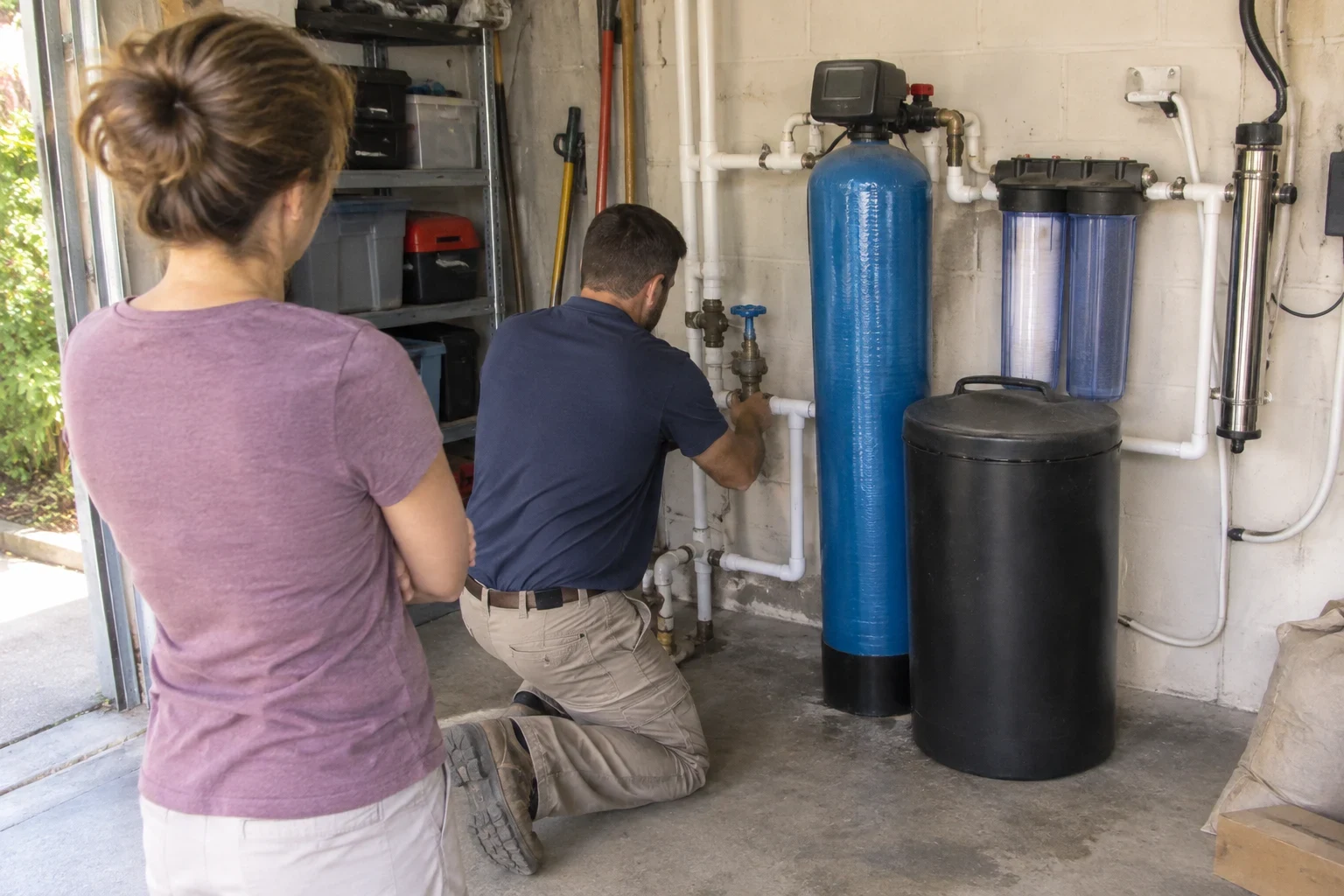
What your softener installation includes
- 01
Sizing to your household
We match the resin capacity to the number of people in your home, your bathrooms and your daily water use. An undersized tank regenerates constantly and wastes salt. An oversized one can let the resin sit idle too long.
- 02
Main line connection with a bypass
The softener goes in where the main line enters, often in the garage, with a bypass valve so you can send water around it for service. We use proper fittings and secure the tanks so they sit level and stable.
- 03
Drain and overflow lines done properly
Regeneration water needs somewhere to go. We run the drain line with an air gap so wastewater cannot siphon back, and add an overflow line from the brine tank.
- 04
Demand-based valve programming
We set the control valve to regenerate based on metered use rather than a fixed calendar. That keeps salt and water use in proportion to what your home actually draws.
- 05
Startup, walkthrough and cleanup
We fill the brine tank, run a first regeneration and show you the bypass, the salt level and the valve display. Packaging and old fittings leave with us, and the work area is wiped down before we go.
Questions about Water Softeners?
Call(727) 428-9335Signs hard water is working against your home
White crust on fixtures
Chalky buildup around faucet aerators, showerheads and the base of taps is mineral scale. It returns within days of cleaning when hardness is the cause.
Spotted glasses and shower doors
Water evaporates and leaves the minerals behind. If spots survive a rinse aid in the dishwasher, the water is a likely culprit.
Soap that never lathers well
Hard water binds with soap, so you use more of it and still feel a film on skin and hair after a shower.
A noisy or slow water heater
Scale settles in the bottom of a tank heater and pops as it heats. It also insulates the burner or element from the water, so recovery slows.
An old softener that no longer keeps up
If you already have a unit and these signs are back, it may need service rather than a new system. Our Water Softener Repair & Maintenance page covers that work, and Water Softener & Filtration System Replacement covers units past saving.
How the work runs, from first call to soft water
- 1
Start with a phone call
We ask about the scale or spotting you have found, the size of your household and where the main supply line comes into your home. From there we tell you plainly whether softening suits the problem and which capacity we would consider.
- 2
A date and an arrival window
We book an install date, give you an arrival window and say honestly how long the water is likely to be off. Should an earlier job run long or a part arrive late, you hear from us the moment we know, well before the window passes.
- 3
Installation
With the water shut off, we cut into the main line, fit the bypass, set the tanks level and route the drain and overflow lines. The floor around the equipment stays covered while we work, and most of the time goes into careful fitting.
- 4
Startup and handover
Water comes back on, every joint gets checked for leaks, and we program the valve and run the first regeneration. You leave knowing how to add salt and how to switch the system to bypass.
What moves the cost of a softener
Every price we give is built from the system and the work your home needs. We explain each part by phone so the number makes sense before the install day is set. Nothing gets added on the day without a conversation first.
- Capacity and valve type
- Larger households need more resin and a valve that handles higher flow. A metered, demand-based valve costs more up front than a basic timer but usually uses less salt.
- Where the main line enters
- An open garage wall with a nearby drain is straightforward. A long drain run, tight closet or relocated plumbing takes more material and time.
- Pairing with filtration
- If you also want chlorine taste addressed, a carbon stage can be installed ahead of the softener in the same visit. That adds equipment but saves a second trip.
- Removing an old unit
- Taking out and hauling away an existing softener, and reworking its old connections, is part of the job when there is one in place.
Water softener questions
How long is the water off during installation?
On a typical garage install, the water is off for only part of the visit, not the whole day. You get our estimate when the date is booked, and we give you a heads-up just before the main valve closes. If we find something that will stretch that time, we tell you before carrying on.
Will the water taste of salt?
A correctly programmed softener adds very little sodium, and most people cannot taste it. If you would prefer drinking water with less sodium, a reverse osmosis system under the kitchen sink pairs well with a softener.
Is potassium chloride an option for the brine tank?
Yes. Nearly every softener we install can regenerate with potassium chloride instead of sodium chloride. Potassium costs more per bag, and the valve sometimes needs a different setting, so mention it when we speak and we will program the unit to suit.
How often does the salt need topping up?
It depends on how much water your home uses and how hard it is, though a refill every month or two is common. Keep the brine tank at least about a third full, and break up any hard crust that forms across the surface.
Who do I call when the softener needs attention later?
Us. We stay with you after the install, so when the system is due for routine upkeep, needs a replacement filter or calls for a service visit, you phone the same people who fitted it. We book a time that works for your week and confirm the arrival window.
Pick a day for softer water
Describe the scale, spotting or stiff laundry you have been living with, and we will talk through sizing and an install day that suits your week. Before we hang up, you will have your arrival window.