What Is a Major Problem With Reverse Osmosis for Dunedin Homes?
Reverse osmosis makes excellent drinking water, but it has trade-offs you should know before one goes under your sink.
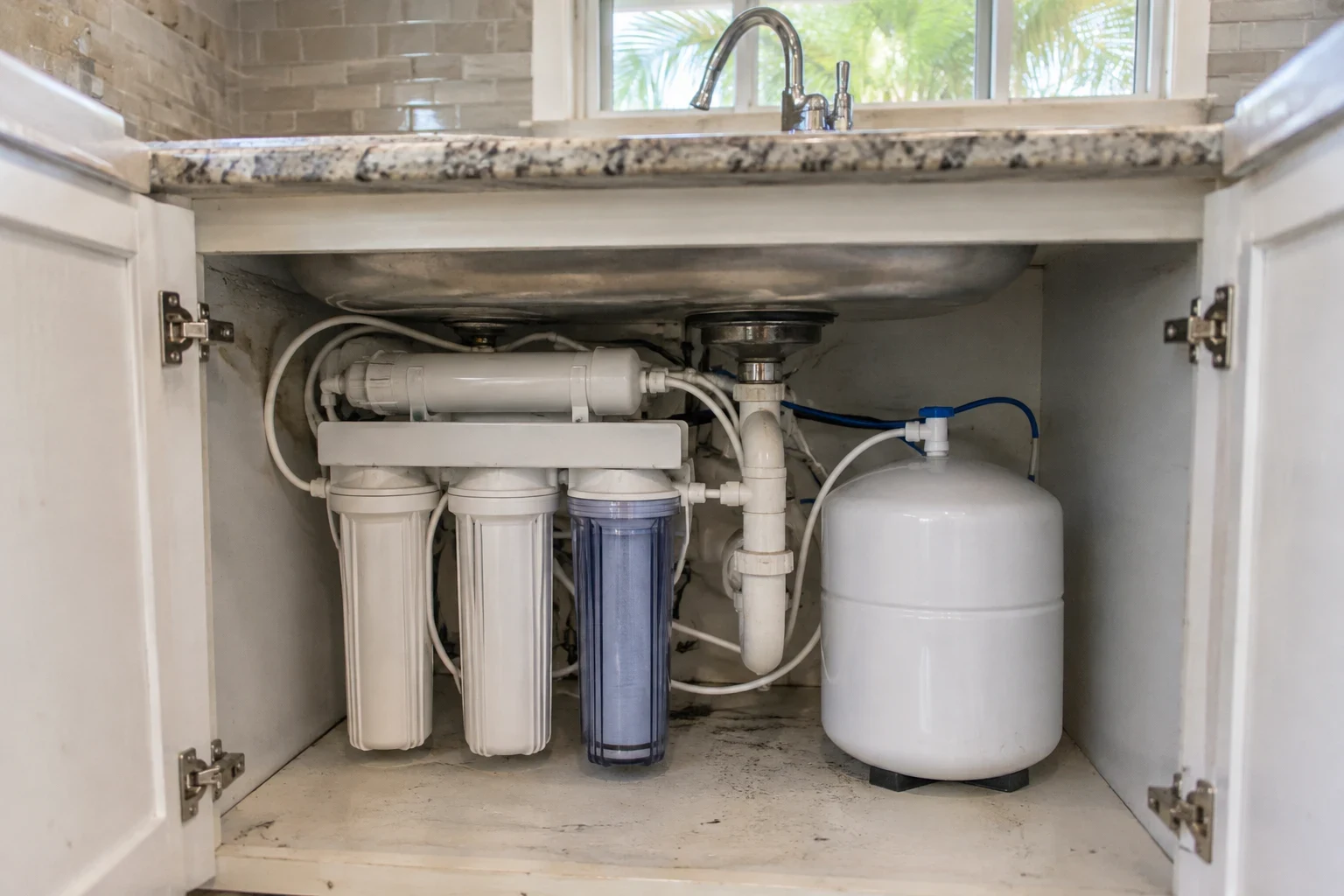
What is a major problem with reverse osmosis?
The biggest problem with reverse osmosis is wastewater. To keep the membrane clean, an RO system sends part of the water it processes down the drain, and basic systems can discard several gallons for each gallon they make. A well-matched system, a permeate pump and steady filter care reduce that waste considerably. Ask us at (727) 428-9335.
Why does reverse osmosis send water down the drain?
An RO membrane is a tightly wound sheet with pores small enough to hold back dissolved salts, metals like lead and many trace contaminants. Water pushed across it splits into two streams. The clean stream goes to your storage tank or faucet, and the second stream carries the rejected material out through a small drain line.
That rinse is what keeps the membrane working. Without it, minerals and sediment would build up on the surface and the membrane would clog within weeks. So the waste is not a defect. It is how the process stays clean.
The amount varies with the design of the system, your water pressure and the water temperature. Warmer water moves through a membrane more easily, which is one small advantage here, where tap water stays mild through most of the year. Low household pressure works the other way and increases waste.
Other drawbacks worth knowing before you buy
Wastewater gets the most attention, but it is rarely the only question homeowners raise once a system is in. These are the others we talk through before an install.
- Slow production. RO makes water a little at a time, so most systems store it in a small pressurized tank. Fill a large pot right after the tank empties and you will notice the flow drop.
- Minerals come out too. The membrane removes calcium and magnesium along with what you want gone. Some people prefer the taste with a remineralizing stage added after the membrane.
- Space under the sink. Prefilters, the membrane housing, the tank and tubing take up most of a standard kitchen cabinet, so the trash pull-out or cleaning supplies may need a new spot.
- Regular upkeep. Prefilters protect the membrane, and if they are left too long chlorine or sediment can shorten its life. Skipped maintenance is the most common reason an RO system disappoints.
How to cut the waste without giving up water quality
Much of the waste depends on choices made at installation. A permeate pump uses the energy in the reject stream to help push clean water into the tank, which lowers the drain flow and fills the tank faster. Newer membrane designs and tankless units can also run at a better ratio than older basic models.
Good prefiltration matters as much as the membrane itself. A fresh sediment filter and an active carbon stage keep the membrane from fouling, and a fouled membrane wastes more water while producing less. If your water is disinfected with chloramine rather than chlorine, the carbon stage needs to be one designed for it, since standard carbon handles chloramine poorly. Our page on chlorine and chloramine removal covers that difference in more detail.
Finally, size the system to how your household actually drinks and cooks. An oversized unit is not wasteful in itself, but a tank that is too small for a busy kitchen keeps the system cycling and running at its least efficient point.
- Ask whether a permeate pump fits your setup.
- Change prefilters on schedule, not when the taste changes.
- Replace the membrane when output or quality drops, not just by the calendar.
Is reverse osmosis still the right choice for your home?
For drinking and cooking water, usually yes. Because RO only treats the water at one faucet, the total amount sent down the drain stays modest compared with laundry, showers or irrigation. You get very clean water for coffee, ice and pasta, and a clear answer for concerns about lead from older plumbing.
Reverse osmosis is the wrong tool for treating every tap in the house. If your main complaint is a chlorine smell in the shower or taste throughout your home, whole-home filtration handles that at the point where water enters, and many households pair the two. We will tell you plainly which one solves the problem you described, even if the answer is the smaller job.
What installation day looks like
Most under-sink RO installs take part of a day, not a full one. We give you an arrival window when we book, and if an earlier job runs long we call before the window opens rather than leaving you waiting. The work involves a cold-water connection, a drain connection with the proper air gap or saddle, a dedicated faucet on the sink or counter, and mounting the tank and filter housings so they stay clear of the cabinet floor.
Before we leave, we flush the system, check every fitting for drips and show you where the shutoff sits. You also get the replacement schedule for each filter. After that, our ongoing customer support for maintenance, filter replacements and service needs means you have someone to call when it is time for new cartridges or if output slows down.
More questions about reverse osmosis
Something not covered here? (727) 428-9335
Will reverse osmosis waste raise my water bill much?
Usually not by a noticeable amount, because the system only processes the water you drink and cook with. A permeate pump and well-kept prefilters keep the drain flow lower still.
Can an RO system supply my refrigerator ice maker?
Yes, with a tubing run from the system to the refrigerator line. Flow to the fridge is gentler than straight tap pressure, so ice may take a little longer to refill after heavy use.
Does reverse osmosis remove fluoride?
A working RO membrane removes most fluoride along with other dissolved minerals. If you want to keep fluoride for any reason, mention it when we talk so we can discuss your options.
What happens if I skip a filter change?
The prefilters load up, the membrane starts to foul and the system makes less water while sending more down the drain. Taste can change too, which is often the first sign something is overdue.
Talk through reverse osmosis before you commit
Call and we will go over how your household uses water, whether RO or whole-home filtration fits better, and which install windows are open. You will know when to expect us and what the visit involves.